

In short. Your dress needs to work when you move, not only in a mirror.
What should you consider?
Your dress needs to work when you move, not only in a mirror. Consider your timeline, comfort and preferred style, and ask the boutique about the details relevant to your chosen dress.
What matters during your fitting?
Your dress needs to work when you move, not only in a mirror. Try moving naturally in the dress and check how the fit feels rather than relying only on photographs.
What should you ask next?
Your dress needs to work when you move, not only in a mirror. Ask about confirmed availability, alterations and practical next steps before making your decision.
Think about the whole wedding day
Imagine putting on your dress in the morning and wearing it until late in the evening. Between those moments, you will walk, pose for photographs, sit down for dinner, greet guests and probably dance. It is not enough for a gown to look remarkable in one carefully arranged position. During your fitting, try a few everyday movements. Sit on a chair, raise your arms as if greeting someone with a hug and take slightly longer steps. If you have to keep correcting your posture in order to feel comfortable, mention it. These tests are not unromantic; they help you enjoy the wedding without thinking constantly about your clothes.
Sleeves, shoulders and hugs
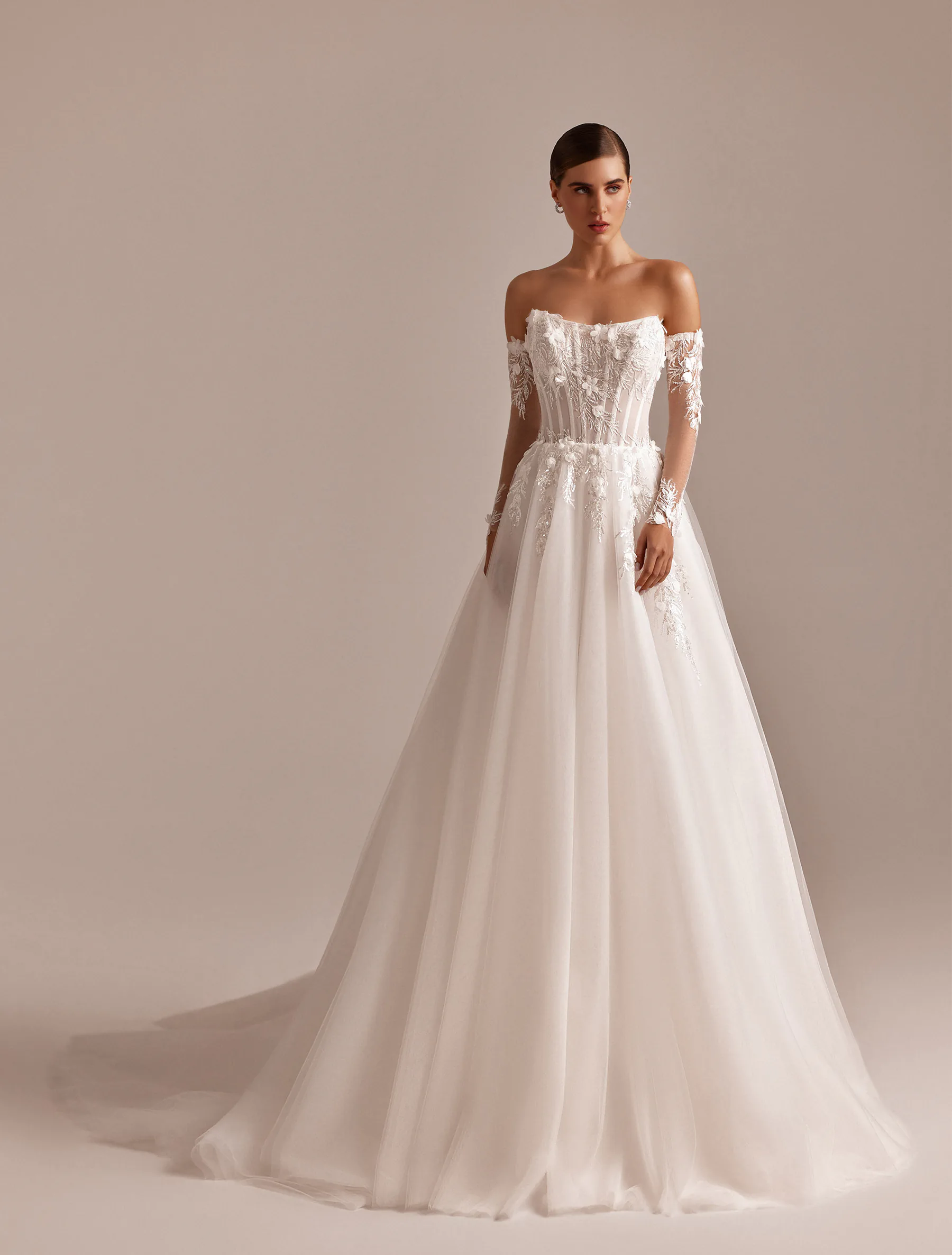
Off-the-shoulder designs can be beautifully romantic, but some constructions limit how high you can raise your arms. Close-fitting sleeves or firm lace can also feel different once you move. That does not mean these styles should be avoided. It means you should test them in conditions that resemble your real day. If you plan to hug everyone you meet or enjoy dancing with your arms raised, try those exact movements. A photograph captures an elegant line but cannot tell you how free you will feel. The right design balances its intended shape with the experience you want to have.
Your bodice should support you
Pay particular attention to the bodice. A well-structured design may provide welcome support, but discomfort, restricted breathing or painful pressure should not be ignored. Sit down for a few moments and notice how the boning, seams or waistline feel. Check whether the bust remains secure when you move. A gown should not require you to pull it up every few minutes. If alterations are suggested, ask what can genuinely be improved and where the construction has limitations. A supportive dress should make you feel confident without demanding that you stay perfectly still.
The train and dance floor
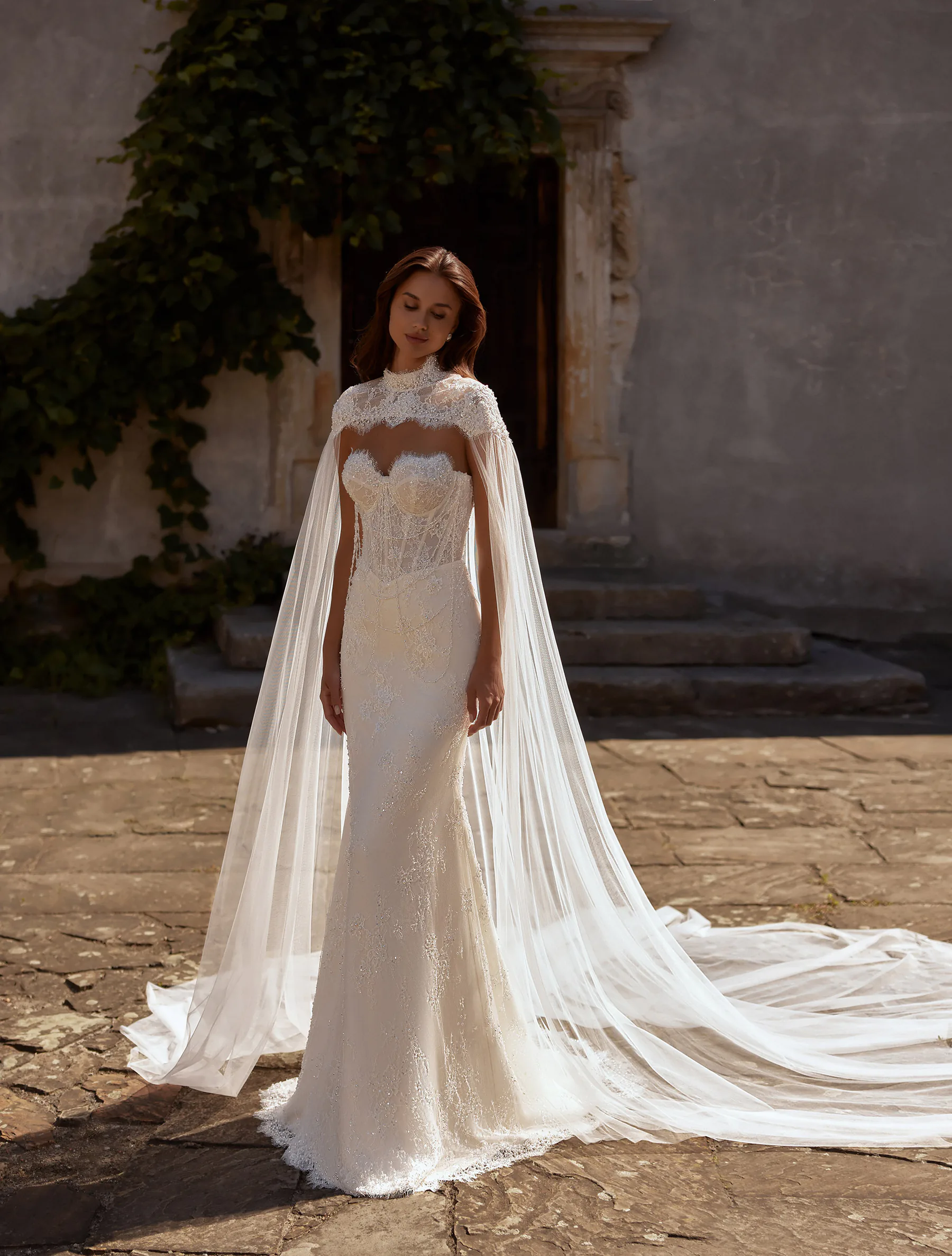
A train adds drama, but it changes the way you move through a room. Ask how it can be lifted for dancing, whether a fastening arrangement already exists and who can show you how to use it. Do not assume all gowns have the same solution. With a very full skirt, consider the space available on the dance floor and how you will move between tables. With a mermaid silhouette, test your stride and how easily you sit down. These are small, practical questions that can prevent irritating problems during the celebration. You deserve to enjoy the reception rather than manage the dress every moment.
Pay attention to your skin
Fabric matters more than it may appear at first glance. Beaded embellishments, firm lace edges and some seams can rub against the skin around the arms and neckline. If your skin is sensitive, mention it during the fitting and pay attention to anything that scratches or irritates. Do not convince yourself that you can simply tolerate discomfort all day because the gown is beautiful. Sometimes an alteration may help; sometimes a differently constructed design is a better choice. Comfort is not a luxury or a weakness. It is part of what makes a dress right for you.
Choose a dress you can enjoy wearing
Finally, ask yourself a simple question: can I imagine wearing this dress when nobody is taking photographs? You can admire a gown and still realise that it does not fit the way you want to experience your wedding. Perhaps a dramatic train is central to your ceremony, or perhaps the freedom of a lighter style matters more throughout the day. There is no universal answer. What matters is finding a dress that creates the look you love and lets you remain present for the people, conversations and moments that make the day yours.
You do not need every answer at the beginning. Start with what you like and stay open to discovery.
A practical checklist before you decide
- Sit down during the fitting and notice whether the waist or bodice becomes uncomfortable.
- Raise your arms to test the hugging and dancing movements you expect to make.
- With an off-the-shoulder dress, check exactly how high you can lift your arms.
- In a mermaid design, take longer steps to test freedom of movement.
- If there is a train, ask how it can be secured and who might help.
- Check that you can breathe comfortably without changing your posture.
- Notice whether lace or embellishments rub the skin beneath your arms.