

In short. A silhouette is a starting point, not a rule.
What should you consider?
A silhouette is a starting point, not a rule. Consider your timeline, comfort and preferred style, and ask the boutique about the details relevant to your chosen dress.
What matters during your fitting?
A silhouette is a starting point, not a rule. Try moving naturally in the dress and check how the fit feels rather than relying only on photographs.
What should you ask next?
A silhouette is a starting point, not a rule. Ask about confirmed availability, alterations and practical next steps before making your decision.
Beyond silhouette labels
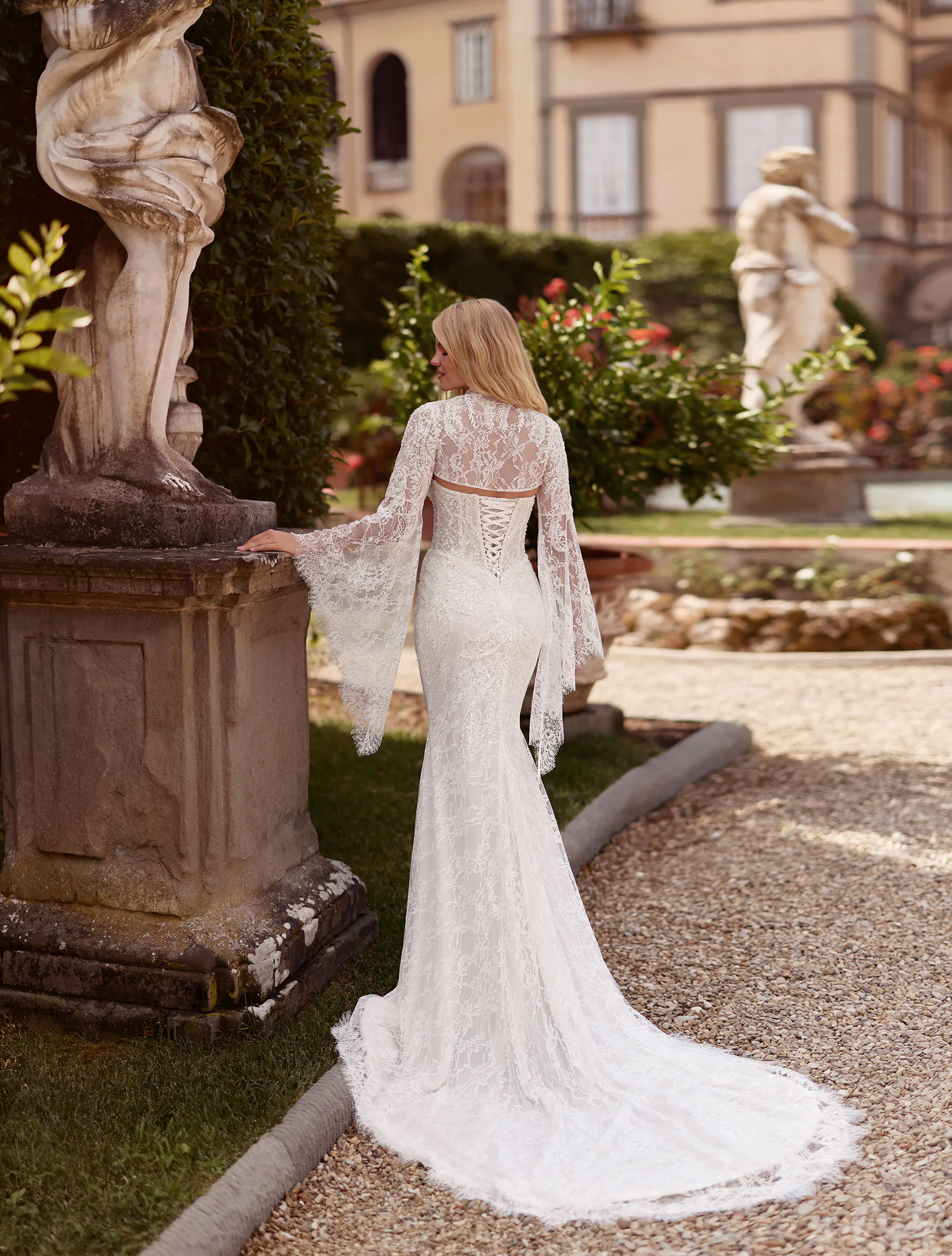
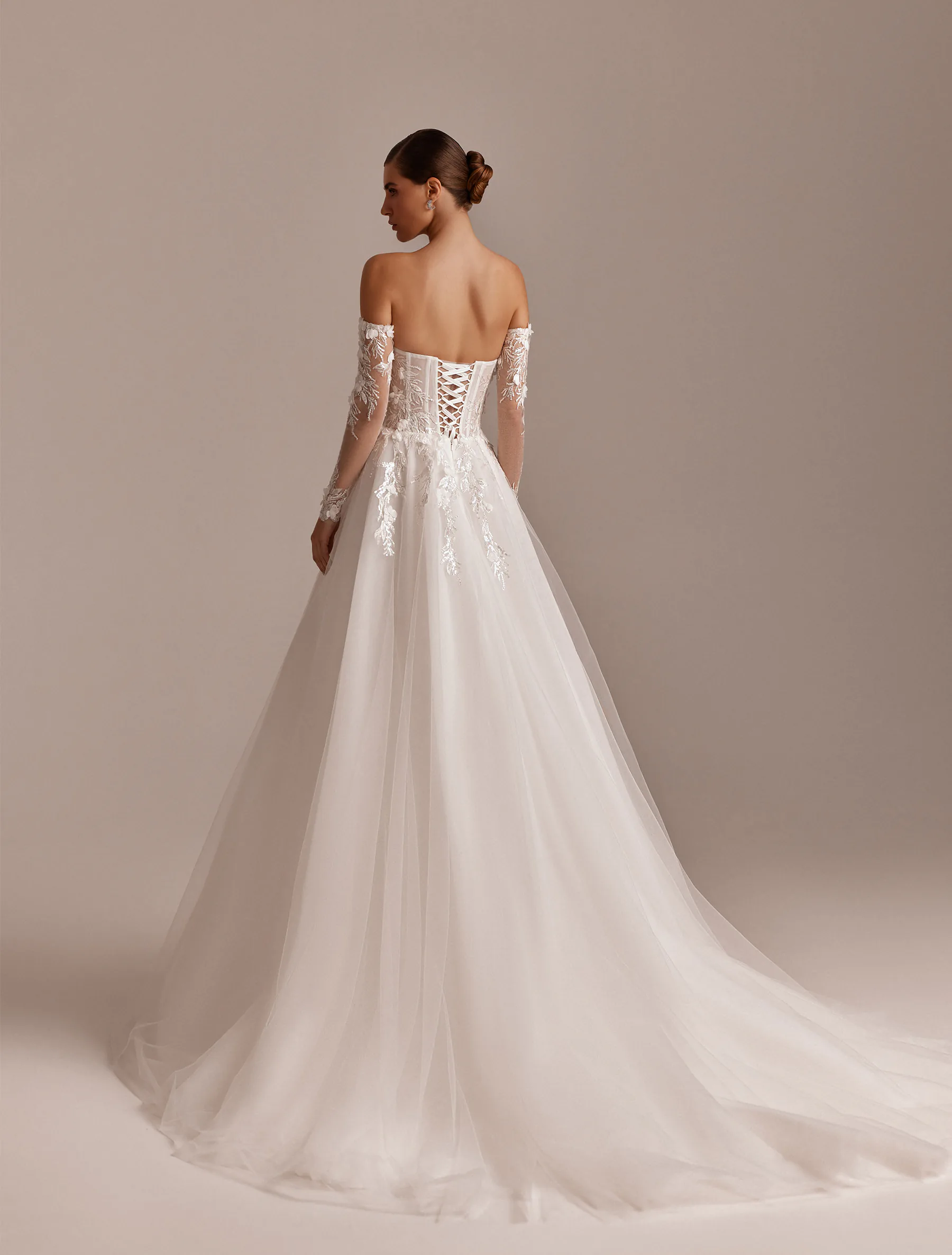
Photographs often make a silhouette look like a simple matter of skirt shape, but the construction of the bodice changes the entire impression. Two A-line gowns can feel completely different: one may have a defined waist and structured bodice, while another features a delicate neckline and a softly falling skirt. Look at the gown as a whole. Notice where the volume begins, how the material moves over the hips and what happens when you walk. The name of the silhouette is useful, but it is only a category. The details are what make one dress feel personally right.
Volume, shape and movement
A princess gown can create a wonderful sense of occasion, yet it is worth considering the weight of the skirt, the space you need to move and the journey between ceremony and reception. A mermaid design follows the figure more closely, so walking and sitting are particularly important tests. Softer, flowing dresses may feel lighter, although their lining and support still matter. No silhouette guarantees comfort by itself. The experience depends on the actual fabric, structure, size and the alterations that can realistically be made to the specific dress you choose.
Body-shape rules do not decide for you
You may have read that a particular body shape is only suited to one kind of gown. Treat those rules cautiously. There is no universal formula for how a bride ought to look. If you love a full skirt, a simple column dress or a dramatic neckline, give yourself permission to explore it regardless of online charts. The useful question is not what you are supposed to hide. It is which lines, proportions and details make you feel confident. Your own preferences deserve more attention than a classification based on measurements alone. A fitting gives you the chance to decide for yourself.
Fabric changes the impression
Try comparing gowns with a similar shape but different materials. Smooth satin can give a clean outline, layered tulle may create volume and movement, and lace brings its own visual texture. Those are general qualities, not proof of what any individual gown is made from. Check verified product information or ask about the actual materials at your appointment. Watch how each fabric behaves when you turn around, take a few steps or sit down. A dress is worn in motion, not as a still photograph. How it feels and moves is part of its beauty.
The silhouette and your venue
Think about the spaces in which you will wear the gown. A dramatic skirt may look stunning in a large reception room, but might be harder to manage on narrow steps. A close-fitting design may require extra consideration if you hope to spend the evening dancing. These are not reasons to abandon a favourite silhouette. They are practical questions that help you make an informed choice. Ask the boutique what is possible for movement, trains and alterations rather than assuming every problem has an easy solution. Your wedding setting matters, but it should not erase your personal style.
How to describe what you love
Before deciding, try describing what you want in your own words: 'I like a defined waist, but I want to move comfortably' or 'I love a minimalist look with something special at the back.' That is often more helpful than asking only for an A-line dress. It opens up possibilities across collections and helps you compare what matters most. Allow yourself to be surprised. Sometimes the design you would have passed over online is the one that feels wonderful during a fitting. The best silhouette is not simply the most flattering in a photograph; it is one you genuinely enjoy wearing.
You do not need every answer at the beginning. Start with what you like and stay open to discovery.
A practical checklist before you decide
- Start with the shape you love, but notice how the gown behaves when you walk.
- Two A-line designs may differ substantially in structure, texture and support.
- A full skirt creates a different impression in movement than in a front-facing photograph.
- With a mermaid dress, check whether you can take your normal stride.
- Ignore rules suggesting you must hide a particular part of your body.
- Look at where the skirt volume begins and how it relates to the bodice.
- A minimalist design can be striking because of proportion and carefully considered construction.
- Let your venue inspire you without allowing the setting to overrule your preferences.
- Try one design you might have overlooked online to create a meaningful comparison.