

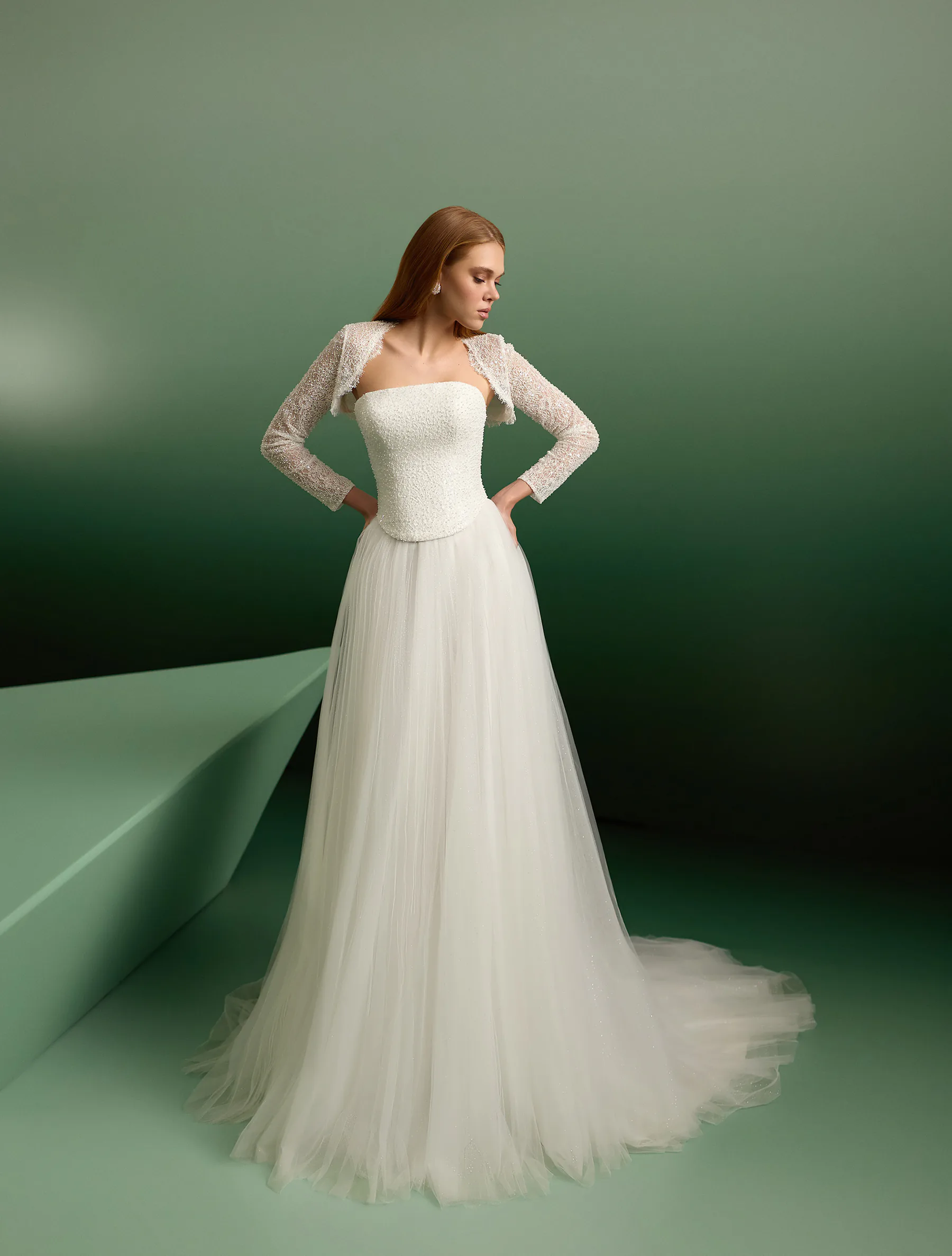
In short. A few centimetres at the hem can change how you move.
What should you consider?
A few centimetres at the hem can change how you move. Consider your timeline, comfort and preferred style, and ask the boutique about the details relevant to your chosen dress.
What matters during your fitting?
A few centimetres at the hem can change how you move. Try moving naturally in the dress and check how the fit feels rather than relying only on photographs.
What should you ask next?
A few centimetres at the hem can change how you move. Ask about confirmed availability, alterations and practical next steps before making your decision.
Begin with the right shoes
It may seem like a small detail, but your shoes change how the dress meets the floor. Changing heel height changes the position of the hem, so it is worth discussing your intended wedding shoes before the final length is set. If you already own them, ask when to bring them to your fitting. If not, avoid choosing a random pair simply to complete the outfit. You need shoes you can genuinely walk in, not just something that looks lovely in a photograph beside the gown. The relationship between your footwear and the hem is a practical one, not merely a styling preference.
Test walking, not just the mirror
At a fitting, walk a few steps at your normal pace. Do not simply take two careful steps towards the mirror. Turn around, change direction and, if the setting allows, see how the skirt behaves on a step. A gown that is too long may become tiring if you have to lift it constantly. At the same time, the hem should not be shortened without considering the design and your final shoes. Discuss the effect you want and what adjustments are actually possible. The goal is not to meet an arbitrary measurement. It is to move comfortably without losing the intended line of the gown.
Check support at bust and waist
Alterations around the bust and waist matter just as much. A gown can look perfect while you stand still but shift when you raise your arms or feel uncomfortable when seated. Check how securely the bodice stays in place and whether any particular underwear is needed. If the dress has sleeves, test how freely you can move. Do not confuse a very tight corset with an excellent fit. Support and comfort should work together. Speak openly about anything that presses, slips or changes your posture. A fitting is your opportunity to notice those details rather than politely ignore them.
Fabrics and feasible changes
Fabric and embellishments can influence which changes are possible. Lace applied near the hem, continuous embroidery or an intricate construction may require a different approach from a plain skirt. That is why no one should promise that every wedding dress can be transformed in any imaginable way. Ask about the limitations of the actual model you have chosen. Sometimes a subtle adjustment makes all the difference; at other times, a more extensive change would disturb the design. A clear explanation early on prevents frustration later and helps you decide whether this is the right gown to begin with.
The train at ceremony and reception
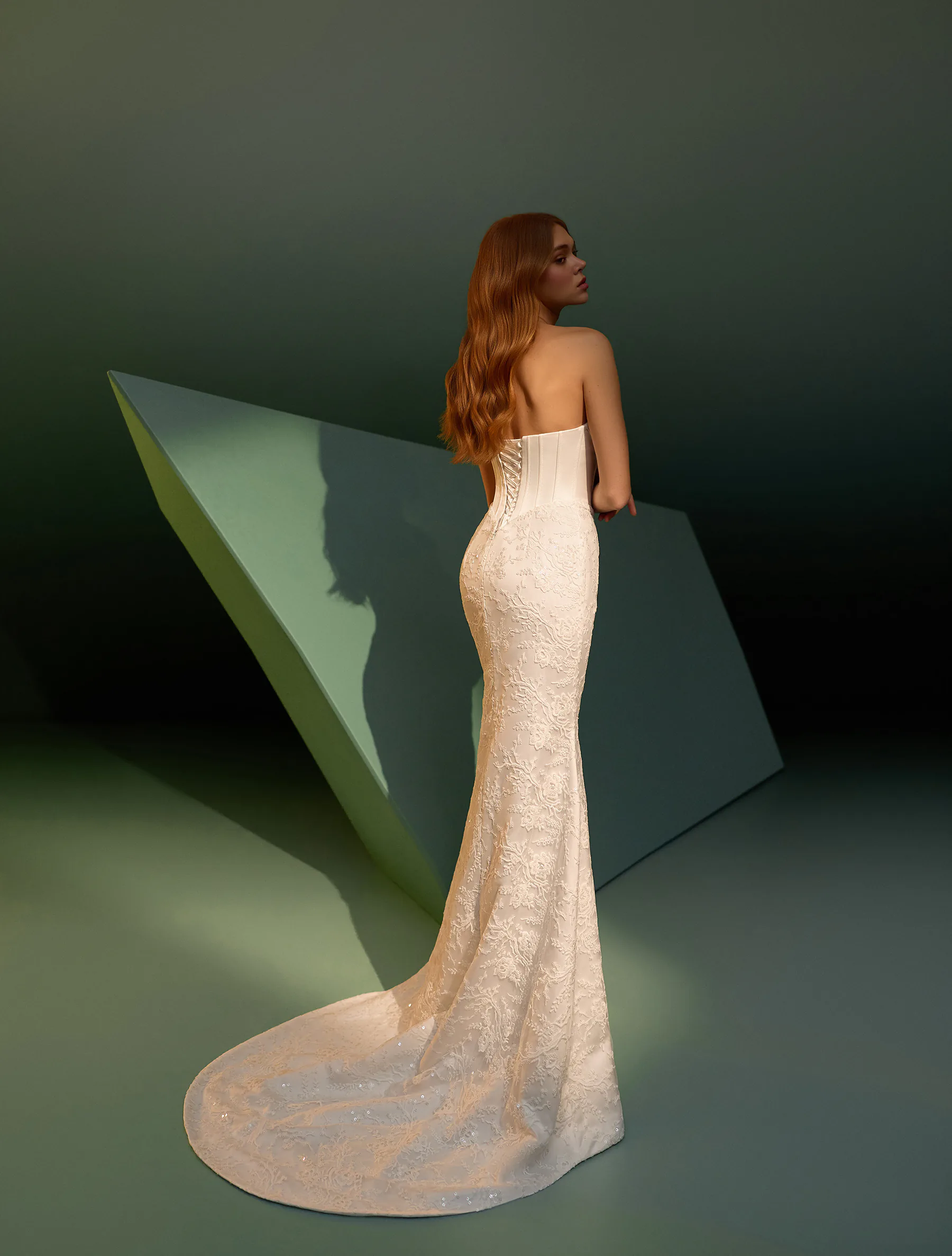
For a gown with a train, think about two separate moments: how you want it to look during the ceremony and how you need to move at the reception. Ask whether a fastening or bustle arrangement is included and how it works. Not every gown comes with one, and any additional work should be discussed for the specific design. With a full skirt, practise turning without catching the fabric. With a close-fitting gown, consider the length of your stride. These small movements reveal far more about practical comfort than a photograph taken while standing perfectly still.
Preparing for the final fitting
Before your final fitting, prepare a short list of everything that could affect how the dress sits: shoes, underwear, perhaps the veil and accessories that touch the shoulders or neckline. Ask the boutique what you actually need to bring rather than assuming every item is required every time. Once the gown is ready, check again how it feels when seated, how you walk and how it fastens. Do not leave questions about transport and dressing until the wedding morning. Thoughtful alterations are not about changing your body; they are about helping the dress work naturally with you.
You do not need every answer at the beginning. Start with what you like and stay open to discovery.
A practical checklist before you decide
- Bring the shoes needed for hem measurements when the boutique asks you to do so.
- If you plan two different heel heights, discuss the options before the hem is altered.
- Walk and turn during the fitting rather than standing motionless in front of the mirror.
- Check the bust and waist while standing and while seated.
- Do not mistake a painfully tight corset for effective support.
- Ask what can be altered when a gown has intricate embroidery or embellishment.
- For a dramatic train, clarify how it might be secured for dancing.
- Not every wedding gown includes a ready-made bustle or train fastening.